Know what vehicles are coming and going
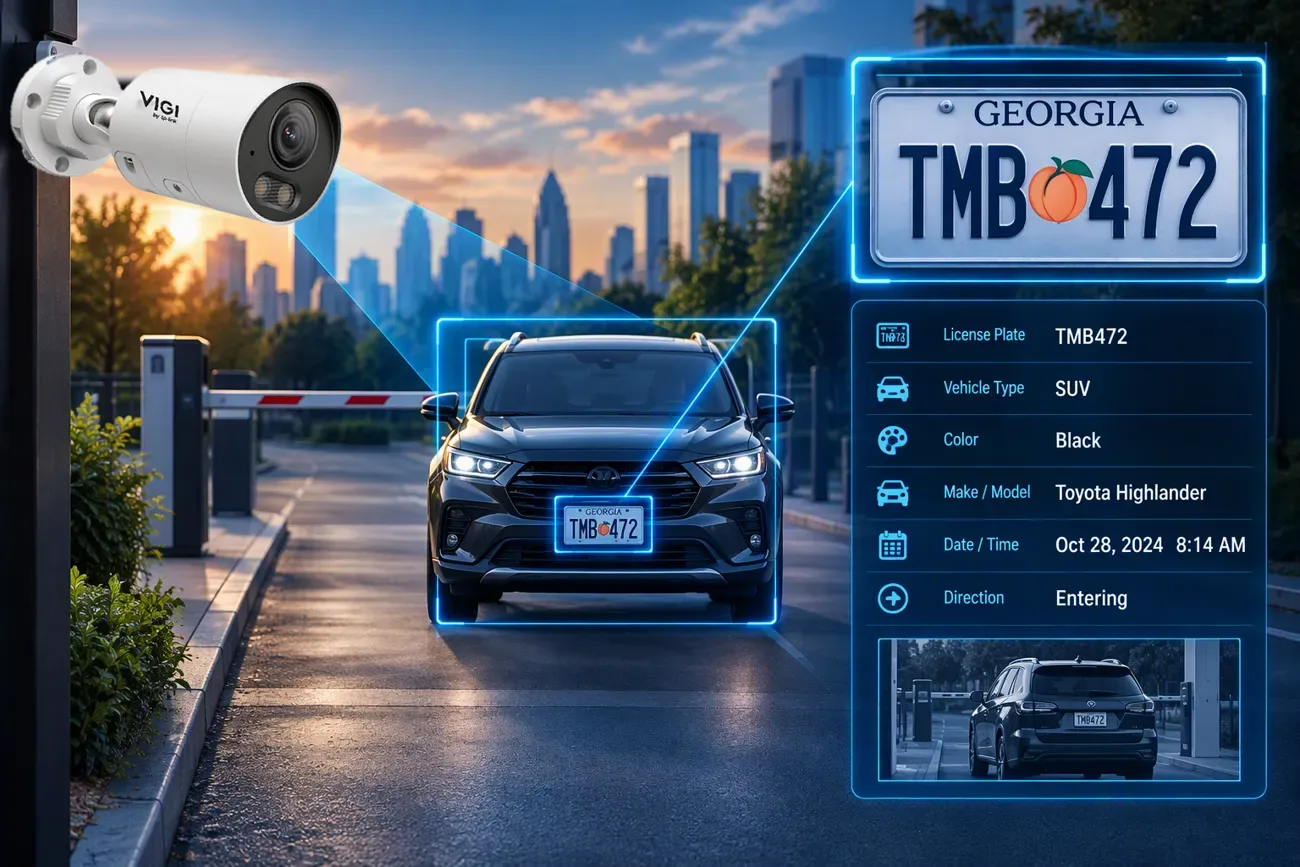
Traditional cameras show you what happened. LPR helps you find it. It captures and organizes vehicle and plate information automatically into a searchable record of vehicle activity across your property, so you can locate a specific vehicle and review entries and exits without searching through hours of video.
- Dedicated ALPR
- Searchable plate log
- Parking & occupancy
- Day and night reads
Plates and video in one place
A dedicated plate reader works with the camera at your gate or entrance. Run it inside Remico Cloud Video, on a server at your site, or in the cloud.
High-accuracy plate reading
Gated entrances, HOAs, lots, logistics yards
- Reads plates that are blurry, dark, angled or moving fast
- Vehicle make, model and color, plus direction of travel
- With Remico Cloud Video, search a plate and jump straight to the recording
- Watch-list alerts for vehicles you're looking for
- Works with the RTSP camera at your entrance
Run the lot from the plate data
Parking operators, apartments, offices, retail lots
- In and out log for every vehicle
- Occupancy and how long vehicles stay
- Visitor time limits and parking rules
- Reports, dashboards and data export
Three ways to run it
We'll recommend the right setup at your site assessment.
From a passing car to a searchable record
Capture
A camera aimed at the entrance or gate lane catches each vehicle, with a fast shutter and infrared so the plate stays sharp at speed and at night.
Read & record
Software reads the plate characters and stores them with the time, the camera, an image of the vehicle and attributes such as type and color.
Search & alert
Look up any plate or vehicle in seconds, export the record for police or insurance, and get alerts for plates on an allow or watch list.
More than vehicle identification
Combined with video analytics, LPR gives a much broader picture of how vehicles, parking areas and the facility itself are used.
Parking space monitoring
Watch individual spaces or entire lots to see which are free or taken, how long vehicles stay, and when demand peaks.
Occupancy management
Track vehicles entering and leaving to estimate current occupancy, find high-traffic periods and see how use changes through the day.
Heat mapping & traffic patterns
See where vehicle activity concentrates, which entrances are busiest, where congestion builds and how vehicles move through the property.
Vehicle search & investigation
Locate a vehicle by plate, vehicle characteristics, time range or recorded event, instead of manually searching video.
Operational intelligence
Over time the data shows parking utilization, traffic flow, entrance use and staffing needs, and where the property could improve.
Watch & allow lists
Alert staff when a flagged plate returns, or when a vehicle that isn't on the resident or tenant list enters.
Why a regular camera usually can't read plates
An overview camera covers a whole lot, so each plate is only a few pixels wide and blurs as the car moves. LPR works when the camera is set up for the plate itself.
- Choke points: gates, entrance lanes and drive-thrus where every vehicle passes slowly in a known spot
- Shallow angle: keep the camera close to straight-on with the plate; steep angles from high poles or the side lose characters
- Zoom, not wide angle: a varifocal or optical-zoom lens fills the frame with the lane
- Fast shutter + IR: stops motion blur and cuts through headlight glare at night
- One lane per camera on wide entrances, so two cars side by side are both read
- Overview camera alongside: pairs the plate with the full vehicle and driver for evidence
Where LPR pays off
Apartment & HOA communitiesResident plate lists at gates, alerts for unknown vehicles.
Parking lots & garagesSpace availability, length of stay, peak demand.
Warehouses & distributionTruck arrivals and departures logged at the yard gate.
Retail centersRepeat-offender vehicles flagged on arrival; traffic by entrance.
Offices & campusesEmployee and visitor parking, after-hours vehicle alerts.
Car washes & drive-thrusVisit counts per vehicle and lane throughput.
Common questions
Can my existing cameras do LPR?
Does LPR work at night?
How fast can a vehicle be moving?
Can LPR run in the cloud?
Who can see the plate data?
Want a record of every vehicle on your property?
Tell us about your entrances, gates and lots. We'll plan camera positions that read plates day and night.